
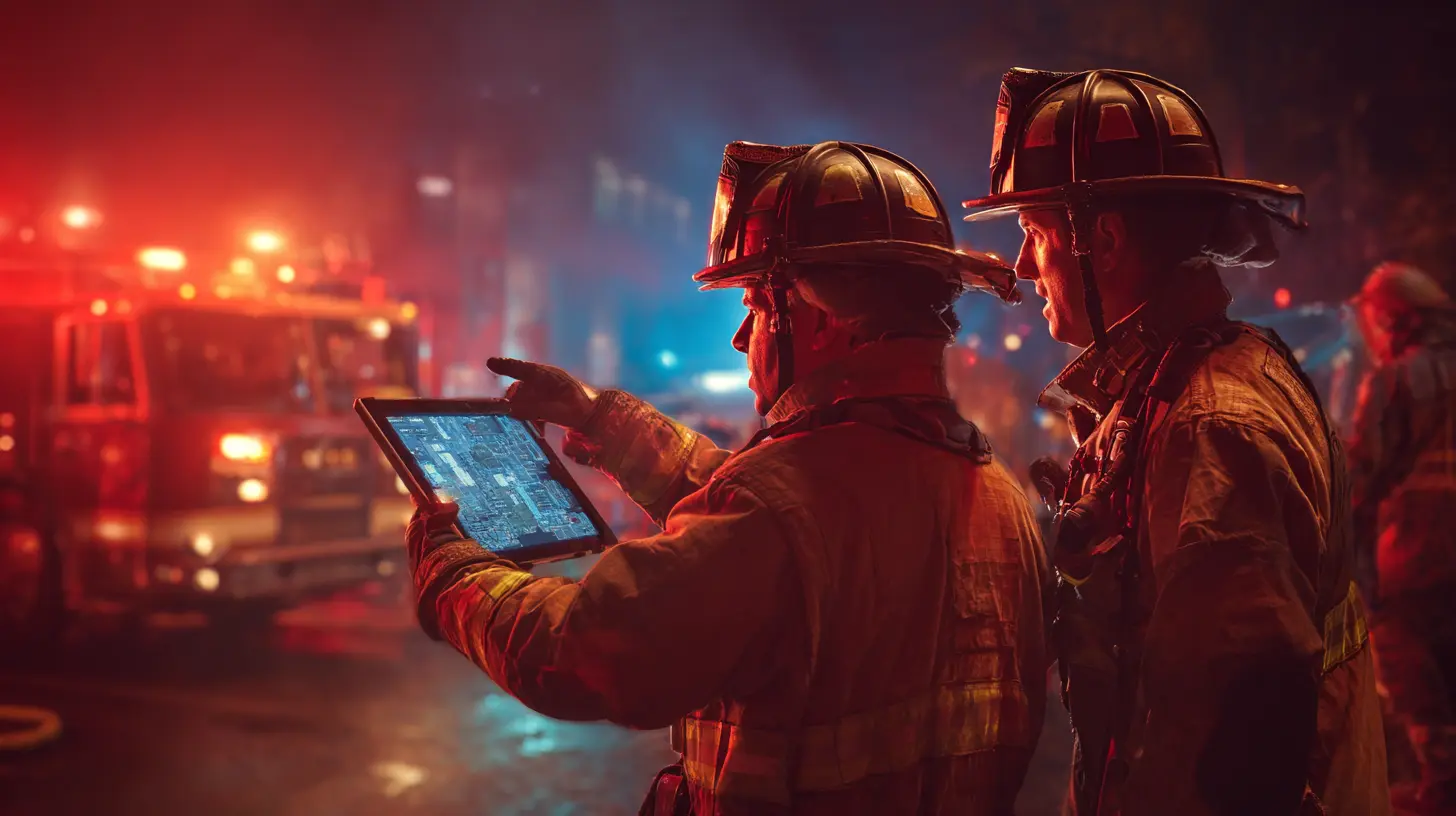
In the face of emergencies, seconds count.
Whether responding to a natural disaster, an active shooter incident, or a hazardous material spill, the ability of organizations and first responders to act quickly and in coordination often means the difference between life and death.
Yet traditional emergency protocols—developed decades ago around paper-based plans, manual checklists, and radio communication—are increasingly inadequate for the complex, fast-moving crises of the modern era.
The future of emergency management protocols lies in the intelligent integration of smart technology with these time-tested traditional protocols.
Rather than replacing human judgment and established procedures, advanced emergency management software enhances and accelerates them—bridging the gap between chaos and coordination when every moment matters.
The Evolution from Reactive to Proactive Emergency Response
For decades, emergency management operated on a fundamentally reactive model.
Organizations developed emergency action plans, trained employees during annual fire drills, and hoped they would never need to implement them.
When emergencies did occur, responders relied on fragmented information, verbal radio communication, and manual coordination that couldn’t keep pace with rapidly evolving situations.
According to the Federal Emergency Management Agency (FEMA), modern emergency management requires a comprehensive transformation—one that emphasizes data-driven, real-time solutions powered by today’s technologies. FEMA’s Integrated Public Alert and Warning System (IPAWS) exemplifies this shift, enabling federal, state, territorial, tribal, and local authorities to send critical public alerts through multiple communication channels simultaneously.
The transformation from reactive to proactive emergency management represents a fundamental paradigm shift.
Rather than simply responding to crises after they occur, organizations now have the capability to detect threats earlier, communicate warnings faster, coordinate responses more effectively, and document actions for compliance and continuous improvement.
Core Technologies Transforming Emergency Management
Internet of Things (IoT) Sensor Networks
IoT sensors form the nervous system of modern emergency management infrastructure. These interconnected devices continuously monitor environmental conditions throughout buildings and facilities—detecting changes in temperature, humidity, air quality, seismic activity, and more.
When sensors detect anomalous patterns or fluctuations, they can trigger automated alerts and initiate response protocols before human observers would even notice a problem.
The capabilities of IoT-based emergency systems have advanced dramatically. Research published in Scientific Reports demonstrates that modern IoT emergency response systems can achieve alert latency under 450 milliseconds, detection accuracy exceeding 95%, and scalability supporting over 12,000 concurrent devices.
These systems combine distributed networks of heterogeneous sensors with edge computing nodes and cloud platforms to ensure low-latency, high-availability operations.
For commercial buildings and corporate facilities, IoT integration means fire detection systems that don’t just sound alarms—they can automatically identify the location and intensity of a fire, shut down HVAC systems to prevent smoke spread, unlock emergency exits, and provide first responders with real-time data before they even arrive on scene.

Cloud-Based Emergency Preparedness Platforms
Cloud-based platforms like BSS Guardian represent the next generation of emergency preparedness technology.
These secured, custom systems provide building occupants with life-saving information 24/7, accessible from any device and at any location.
By creating comprehensive modules for fire, active shooter, medical, terrorist, and other incidents, cloud-based platforms ensure that emergency preparedness strategies, evacuation routes, and floor plans are readily available when they’re needed most.
The cloud-based approach offers several critical advantages.
Training is conveniently delivered, recorded, summarized, and reported—eliminating the administrative burden of paper-based tracking while demonstrating regulatory compliance.
Critical information can be transmitted worldwide before disaster strikes and updated in real-time as situations evolve. And because the platform lives in the cloud, it remains accessible even when local infrastructure fails.
Mobile-First Response Applications
Mobile applications have become essential tools for emergency response, putting critical building systems information directly in the hands of incident responding personnel. Solutions like BSS First Responder combine actionable information with communication capabilities, enabling an integrated and coordinated response to incidents of any type.
These mobile platforms provide building-specific information summarized in quick-reference descriptions, selected schematics, and interactive floor plans that quickly identify the location of critical building equipment.
Crucially, they maintain access to essential information even without internet connectivity—a vital capability when disasters often disrupt communication infrastructure.
Communication features enable chat and voice communication between individual users and groups, ensuring responders can coordinate effectively even in chaotic situations.

Real-Life Examples: Smart Technology in Action
IoT-Powered Wildfire Detection and Response
California’s ongoing battle with wildfires has driven innovation in IoT-based emergency detection. Advanced camera networks combined with artificial intelligence can now identify potential wildfires by analyzing smoke patterns and heat signatures.
The system collects vast amounts of data, including aerial surveys, to quantify potential fuel loads from vegetation volumes.
When paired with traditional emergency management protocols, these systems don’t replace human decision-making—they enhance it. Emergency managers receive automated alerts with location data and risk assessments, enabling them to activate evacuation plans faster and with greater precision than ever before possible.
Real-Time Flood Monitoring in Bangladesh
In Bangladesh’s flood-prone coastal regions, IoT-based monitoring systems use sensors to measure water levels in rivers and canals, providing crucial lead time based on predefined status thresholds.
The infrastructure monitors four primary indicators—Normal, Warning, Flood, and Severe Flood—detecting up to 4 meters of rising water levels. This setup has been fundamental to providing timely warnings and allowing thousands of residents to evacuate before severe flooding occurs.
This example illustrates how smart technology integrates with traditional protocols. The IoT sensors provide the data and early warning; traditional emergency management protocols determine the response—when to issue alerts, how to coordinate evacuations, where to establish shelters. Technology and tradition work together to save lives.
Smart City Emergency Coordination
Several major cities have successfully integrated IoT into their emergency systems with remarkable results.
Barcelona uses IoT sensors to monitor parking spaces and control traffic flow during emergencies, enabling ambulances and fire trucks to reach incidents faster. Singapore has implemented an advanced traffic management system that utilizes IoT data for efficient first response, automatically adjusting traffic signals to create clear paths for emergency vehicles.
In London, the fire brigade uses IoT sensors to monitor fire hydrants and water mains, identifying potential problems and ensuring firefighters have reliable water access during emergencies.
San Francisco’s department of emergency management uses IoT sensors to monitor air quality and water quality, tracking pollution spread and ensuring the city is prepared for environmental emergencies.
Meeting Regulatory Requirements with Smart Technology
The Occupational Safety and Health Administration (OSHA) requires employers to have written emergency action plans that include procedures for emergency evacuation, accounting for employees after evacuation, and coordinating with emergency services.
Smart technology doesn’t replace these requirements—it makes compliance easier and more effective.
Traditional approaches to OSHA compliance relied on paper-based plans stored in binders, annual training sessions with sign-in sheets, and manual headcounts during evacuation drills. Smart technology transforms this approach.
Cloud-based platforms automatically track training completion and maintain compliance records. Mobile applications ensure emergency procedures are always accessible to employees.
Digital systems enable real-time accounting of personnel during evacuations, using badge swipes, GPS location data, or app-based check-ins to identify who remains unaccounted for.
For organizations operating in California, Senate Bill 553 workplace violence prevention requirements add additional compliance obligations.
Technology-enabled solutions help organizations develop workplace violence prevention plans, deliver required training, maintain incident logs, and document compliance—all while minimizing administrative burden and reducing legal liability exposure.
Reducing Legal Corporate Liability Through Technology Integration
Legal liability represents one of the most compelling drivers for technology adoption in emergency management. When emergencies result in injuries or deaths, organizations face scrutiny of their preparedness, training, and response.
Documentation of emergency preparedness efforts—or lack thereof—becomes critical evidence in litigation.
Smart emergency management technology creates comprehensive audit trails that traditional paper-based systems cannot match.
Every training session is recorded with timestamps and participant verification.
Every drill is documented with participation data and performance metrics. Every emergency response action is logged for post-incident review.
This documentation demonstrates due diligence and can provide powerful evidence that an organization took reasonable steps to protect its employees and occupants.
Consider a scenario where an active shooter incident occurs at a corporate campus. With traditional emergency systems, the organization might struggle to demonstrate what training employees received, when evacuation procedures were last updated, or how quickly the response was initiated.
With smart emergency management technology, the organization can show precise records of active shooter training completion, real-time logs of alert dissemination, documentation of shelter-in-place or evacuation procedures followed, and communication records with law enforcement.

Best Practices for Integrating Smart Technology with Traditional Protocols
Successfully integrating smart technology with traditional emergency protocols requires thoughtful planning and implementation. Organizations should consider the following best practices:
Start with a Comprehensive Assessment
Before implementing any technology, conduct a thorough assessment of current emergency management capabilities, vulnerabilities, and gaps. Identify which traditional protocols are working well and which could benefit from technological enhancement. Understand the specific risks your organization faces and prioritize technology investments accordingly.
Integrate with First Responder Agencies
Technology that doesn’t connect with external emergency services misses a critical opportunity. Provide local fire, police, and EMS with secure access to your digital emergency dashboard.
Share building layouts, hazardous materials information, and occupant data.
Establish joint response protocols that leverage your technology investments. When first responders arrive already informed about your facility’s layout and current situation, response times decrease and outcomes improve.
Train Extensively and Continuously
Technology is only as effective as the people using it. Conduct comprehensive training sessions for all employees, security teams, and facilities staff. Run live simulations using the platform—not just traditional fire drills, but realistic scenarios that test the full capabilities of your smart emergency systems. Provide refresher courses and role-based training to ensure everyone remains proficient.
Plan for Technology Failures
Smart technology enhances emergency response, but it must not become a single point of failure.
Ensure systems can operate offline when network connectivity fails.
Maintain traditional backup procedures that can be activated if technology fails. Test failover capabilities regularly to ensure they function when needed.
The Role of Business Continuity Planning
Emergency management technology connects directly to broader business continuity planning efforts. While emergency response focuses on the immediate crisis, business continuity ensures organizations can maintain or quickly resume critical functions during and after disruptions.
According to Ready.gov, the federal government’s emergency preparedness resource, effective business continuity planning requires understanding potential threats, identifying critical functions, and establishing procedures to maintain operations through disruptions.
Smart technology accelerates each of these elements—providing real-time threat intelligence, enabling remote operations when facilities are inaccessible, and maintaining communication with employees, customers, and stakeholders throughout a crisis.
The integration of emergency management and business continuity technology creates a unified approach to organizational resilience.
Rather than treating safety and operations as separate concerns, smart platforms connect them—ensuring that emergency response procedures align with business recovery priorities, and that the same technology supporting emergency response also enables business continuity.
Looking Ahead: Emerging Trends in Emergency Technology
The Department of Homeland Security’s Science and Technology Directorate is actively working on the Emergency Management of Tomorrow Research (EMOTR) Program, developing strategies to mitigate threats before they happen. Several emerging trends will shape the future of emergency management technology:
Artificial Intelligence and Predictive Analytics
Machine learning algorithms are already calibrating flood extents, wildfire spread, and infrastructure damage within minutes of satellite observations.
Future AI systems will provide increasingly accurate predictions of emergency scenarios, enabling truly proactive emergency management. Rather than responding to emergencies after they begin, organizations will be able to take preventive action based on AI-identified risk patterns.
Digital Twin Technology
Digital twins—virtual replicas of physical facilities—enable sophisticated emergency simulations and planning.
Organizations can model emergency scenarios in their digital twin, test response procedures virtually, and identify vulnerabilities before real emergencies occur.
During actual incidents, digital twins provide responders with real-time visualization of evolving situations.
Automated Response Systems
Future emergency systems will incorporate increasing levels of automation. Smart buildings will automatically respond to detected threats—sealing off affected areas, activating suppression systems, unlocking emergency exits, and guiding occupants to safety through dynamic wayfinding. Human judgment will remain essential for complex decisions, but routine emergency response actions will be executed automatically and instantaneously.
Conclusion: Bridging Chaos and Coordination
The future of emergency management lies not in choosing between smart technology and traditional protocols, but in their intelligent integration. Technology provides the speed, scale, and precision that human capabilities alone cannot match.
Traditional protocols provide the structured frameworks, tested procedures, and human judgment that technology cannot replace.
Organizations that successfully integrate these approaches gain significant advantages: faster response times, better coordination with first responders, comprehensive documentation for compliance and liability protection, and improved outcomes when emergencies occur.
Those that fail to adapt risk being overwhelmed when crises strike—with potentially devastating consequences for their employees, customers, and communities.
The question is no longer whether to adopt smart emergency management technology, but how quickly and comprehensively organizations can integrate it with their existing protocols.
In a world where emergencies are becoming more frequent and more complex, the organizations best prepared to respond will be those that have bridged the gap between chaos and coordination—combining the best of human judgment with the power of modern technology.
Ready to transform your emergency management approach? Contact Building Safety Solutions today to learn how our technology solutions can protect your people, your property, and your business.