

Workplace violence remains one of the most pressing employee safety concerns facing organizations today. With approximately 2 million American workers experiencing workplace violence annually according to OSHA, establishing a robust workplace violence prevention program is no longer optional—it’s a critical component of protecting lives while limiting your organization’s legal liability.
This comprehensive guide will walk you through creating an effective workplace violence prevention plan that not only safeguards your employees but also protects your organization from costly litigation and reputational damage.
Understanding Workplace Violence and Your Legal Obligations
Before developing your workplace violence prevention strategies, it’s essential to understand what constitutes workplace violence and your organization’s legal responsibilities.
What qualifies as workplace violence?
According to OSHA’s workplace violence guidelines, workplace violence includes any act or threat of physical violence, harassment, intimidation, or other threatening disruptive behavior that occurs at the workplace. This encompasses:
• Physical assaults and attacks • Threats of violence or intimidating behavior • Verbal abuse and harassment • Active shooter situations • Domestic violence that extends into the workplace
OSHA Workplace Violence Requirements and Compliance
While OSHA doesn’t have a specific federal standard for workplace violence compliance, employers are still obligated under the General Duty Clause (Section 5(a)(1)) to provide a workplace “free from recognized hazards” that are likely to cause death or serious physical harm. This creates a clear duty of care workplace violence obligation for all employers.
Several states, including California with Senate Bill 553, have enacted specific workplace violence prevention regulations requiring written prevention plans. Organizations must ensure compliance with workplace violence regulations applicable in their jurisdictions to avoid fines, citations, and increased workplace violence legal liability.
The Financial and Human Cost of Workplace Violence
Understanding workplace violence statistics reveals the true scope of this crisis. Beyond the approximately 500 workplace homicides occurring annually in the United States, thousands more workers suffer non-fatal injuries requiring medical treatment, time away from work, and long-term psychological trauma.
The cost of workplace violence extends far beyond immediate medical expenses:
• Lost productivity and absenteeism
• Increased workers’ compensation claims
• Legal fees and settlements
• Damaged brand reputation
• Higher insurance premiums
• Employee turnover and recruitment costs
For organizations seeking to protect the life of their business, implementing comprehensive violence prevention training and emergency preparedness workplace protocols is an investment in business continuity and employee well-being.
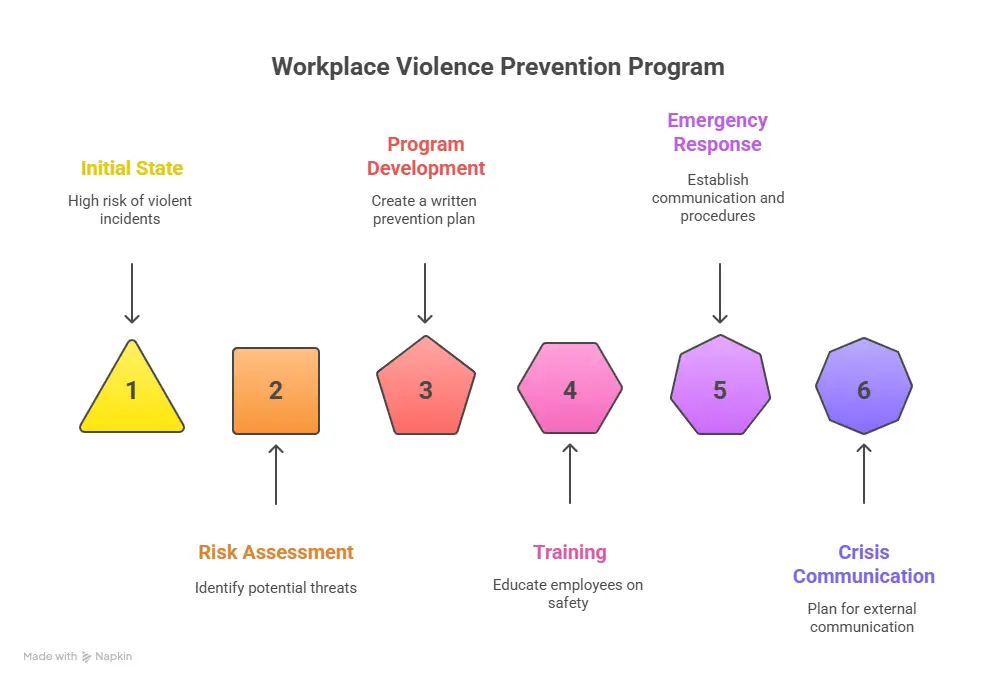
Step 1: Conduct a Comprehensive Workplace Violence Risk Assessment
Every effective workplace violence prevention plan begins with a thorough workplace violence risk assessment. This process identifies potential vulnerabilities, evaluates existing security measures, and establishes a baseline for improvement.
Certain industries and work environments face heightened risks.
Consider these factors during your workplace threat assessment:
• Working with the public, especially handling cash transactions
• Providing care or services to volatile or unstable individuals
• Working alone or in isolated areas
• Working late nights or in high-crime areas
• Locations where alcohol is served
• Facilities with inadequate security measures
Building Safety Solutions offers specialized site assessment services that identify single points of failure and vulnerabilities in your physical infrastructure and operational procedures.
Analyzing Warning Signs of Workplace Violence
Part of your risk assessment should include training staff to recognize warning signs workplace violence may be imminent:
• Behavioral indicators such as increased agitation or aggression
• Direct or veiled threats against coworkers or the organization
• Obsession with weapons or violent incidents
• Evidence of substance abuse
• Concerning social media posts or communications
• Disciplinary issues or conflict with management
Creating a culture where employees feel empowered to report concerning behavior is critical to prevention.
Step 2: Develop Your Written Workplace Violence Prevention Program
A comprehensive written workplace violence prevention program serves as your organization’s blueprint for preventing, responding to, and recovering from violent incidents.
Your comprehensive workplace violence guide should include:
- Management commitment and employee participation
Document leadership’s commitment to a zero-tolerance policy toward workplace violence. Establish clear procedures for employee involvement in developing and implementing workplace safety program elements.
- Workplace security measures and physical controls
Outline specific workplace security measures tailored to your facility:
• Access control systems and visitor management protocols
• Video surveillance and monitoring systems
• Adequate lighting in parking areas and building perimeters
• Panic buttons and emergency communication devices
• Secure areas for handling cash or valuable assets
Building Safety Solutions provides emergency management software that integrates with your physical security infrastructure to enable rapid incident response.
- Administrative controls and policies
Define clear policies addressing:
• Zero-tolerance statements regarding violence and threats
• Procedures for reporting threats or concerning behavior
• Investigation protocols for reported incidents
• Disciplinary actions for policy violations
• Protection against retaliation for reporting
- Threat assessment protocols
Establish a multidisciplinary threat assessment team responsible for evaluating reported concerns. This team should include representatives from human resources, security, legal, and management to conduct thorough threat assessment protocols.

Step 3: Implement Comprehensive Employee Safety Training
Even the most well-designed prevention plan fails without proper employee safety training. Your training program should be ongoing, not a one-time event.
All staff should receive foundational violence prevention training covering:
• Understanding what constitutes workplace violence
• Recognizing early warning signs and behavioral indicators
• De-escalation techniques for potentially volatile situations
• Procedures for reporting threats or concerns
• Personal safety strategies
• Emergency response procedures
Building Safety Solutions offers live training sessions and web-based training modules via BSS Guardian that include the foundational violence prevention training described above, which can be customized to your organization’s specific needs and industry requirements.
Active Shooter Preparedness and Response
Given the increasing frequency of active shooter incidents, dedicated active shooter preparedness training is essential. Your active shooter response training should cover:
• Run, Hide, Fight protocols
• Lockdown procedures
• Communication with law enforcement
• Evacuation routes and assembly areas
• Post-incident response and recovery
BSS Guardian includes an Active Shooter Module that provides building occupants with critical information accessible 24/7 from any mobile device.
Leadership requires enhanced training on:
• Conducting difficult conversations about concerning behavior
• Documentation requirements for HR and legal purposes
• Managing terminations and other high-risk situations
• Supporting employees after traumatic incidents
Step 4: Establish Emergency Response Procedures and Communication Systems
When violence occurs, seconds matter. Your workplace violence incident response plan must enable rapid, coordinated action.
Implement emergency notification systems that can instantly alert employees to threats. Modern emergency preparedness software like BSS Guardian enables:
• Notification via text, email, and mobile app alerts
• Two-way communication between employees and emergency coordinators
• Location-specific alerts for large or multi-building campuses
• Integration with building access control and security systems
Document clear workplace violence response procedures for different scenarios:
• Immediate threat response (active violence in progress)
• Threat assessment and investigation procedures
• Law enforcement notification and coordination
• Medical emergency response
• Building lockdown or evacuation protocols
• Post-incident procedures
First Responder Coordination
Effective first responder coordination can save lives. BSS First Responder provides emergency personnel with instant access to critical building information including:
• Building layouts and floor plans
• Location of utility shutoffs and emergency equipment
• Hazardous materials information
• Communication protocols
• Security system details
This emergency response system dramatically reduces response times and improves coordination during critical incidents.
Step 5: Implement Crisis Communication Plans
Effective crisis communication plans are essential for managing information flow during and after violent incidents.
Your plan should address:
• Who has authority to activate emergency communications
• Primary and backup communication channels
• Message templates for different scenarios
• Procedures for accounting for all employees
• Family notification protocols
BSS Guardian includes a “Safe Status” feature allowing employees to report themselves safe after an incident, automatically notifying appropriate personnel and reducing confusion during chaotic situations.
External Communication and media relations
Designate official spokespersons and establish protocols for:
• Media inquiries and press releases
• Social media monitoring and response
• Stakeholder notifications (customers, vendors, partners)
• Regulatory reporting requirements
Controlling the narrative helps protect your brand reputation during crisis situations.
Step 6: Leverage Emergency Management Technology
Modern emergency management technology transforms workplace violence prevention from reactive to proactive.
Implementing emergency management technology delivers measurable benefits:
• Reduced administrative burden for compliance tracking
• Faster emergency response times
• Improved coordination between security teams and first responders
• Better documentation for legal protection
• Enhanced employee confidence and sense of security
• Demonstrated commitment to employee protection
Step 7: Ensure Liability Protection and Compliance Documentation
Comprehensive documentation is essential for liability protection, workplace violence and demonstrating due diligence.
Organizations face potential workplace violence legal liability from multiple angles:
• Negligent hiring or retention claims
• Failure to provide adequate security
• Inadequate response to known threats
• Insufficient training or supervision
A well-documented, actively implemented prevention program provides critical legal protection by demonstrating your organization took reasonable steps to prevent foreseeable harm.
BSS Guardian automatically tracks and reports training compliance by user, department, and location, creating an audit trail that demonstrates your commitment to workplace safety compliance.
Step 8: Establish Incident Reporting and Investigation Procedures
Clear procedures for how to report workplace violence are fundamental to an effective prevention program.
Employees must feel safe reporting threats, concerning behavior, or incidents without fear of retaliation. Your procedures should include:
• Multiple reporting channels (supervisor, HR, anonymous hotline)
• Clear definition of what should be reported
• Guaranteed confidentiality to the extent possible
• Protection against retaliation for good-faith reports
• Timelines for response and investigation
When incidents or threats are reported, conduct prompt, thorough investigations following workplace violence incident response plan procedures.
Step 9: Develop Post-Incident Response and Recovery Plans
Your employee protection plan must extend beyond the immediate incident to address long-term recovery.
Following a violent incident, the following action should be taken:
• Secure the scene and preserve evidence for law enforcement
• Provide immediate medical care to injured persons
• Account for all employees and ensure their safety
• Activate crisis communication protocols
• Notify appropriate authorities and stakeholders
• Begin incident documentation
Step 10: Implement Continuous Improvement and Program Evaluation
An effective workplace violence prevention program requires ongoing assessment and refinement.
Conduct formal reviews at least annually to evaluate:
• Training effectiveness and participation rates
• Number and types of incidents reported
• Response times and outcomes
• Employee feedback and concerns
• Compliance with legal requirements
• Emerging risks or threat trends
Stay current with workplace violence prevention best practices.
Protecting Lives While Limiting Liability
Creating a comprehensive workplace violence prevention guide is not merely a compliance exercise—it’s a fundamental commitment to employee well-being and organizational resilience.
By implementing the strategies outlined in this guide, your organization can:
• Significantly reduce the risk of violent incidents
• Demonstrate duty of care to employees
• Achieve compliance with regulatory requirements
• Minimize legal liability and financial exposure
• Protect brand reputation and stakeholder confidence
• Foster a culture of safety and security
The integration of modern emergency management technology like BSS Guardian and BSS First Responder transforms prevention efforts from paper policies to actionable, technology-enabled programs that truly protect your most valuable assets—your people.
Building Safety Solutions has helped organizations across North America implement comprehensive workplace safety programs that save lives while protecting against liability. Our proven solutions combine expert consultation, cutting-edge technology, and ongoing support to ensure your prevention program remains effective and compliant.
Take action today.
Don’t wait for an incident to occur before prioritizing workplace violence prevention. Contact Building Safety Solutions to schedule a consultation and learn how our emergency preparedness software and services can help you create a safer workplace while limiting liability.
Protect your employees. Protect your organization. Protect the life of your business.